Keywords: Cut Wire Shot, Cut Wire Shot Size, Cut Wire Shot Selection, Shot Peening Media, Shot Blasting Media, Steel Cut Wire Shot, Stainless Steel Cut Wire Shot, Shot Peening Process, Surface Preparation Media
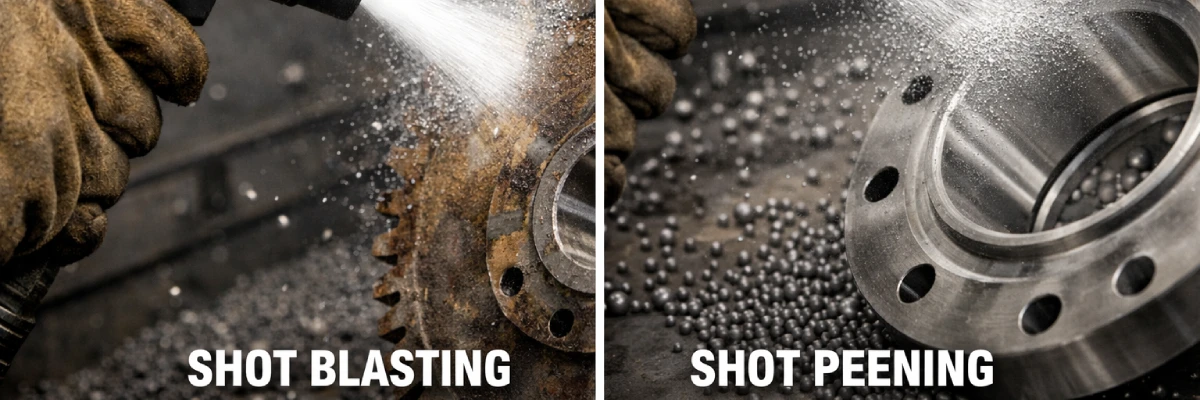
Selecting the correct cut wire shot size is one of the most critical decisions in achieving consistent, high-quality metal surface treatment. Whether the goal is surface cleaning, deburring, descaling, or shot peening, the size of the shot you choose directly affects:
- Surface profile
- Fatigue strength improvement
- Coverage and consistency
- Operation cost
- Final surface finish
With hundreds of possible applications across automotive, aerospace, forging, castings, and manufacturing, choosing the right shot size isn’t always straightforward. However, with a clear understanding of how shot size influences performance, you can significantly improve your blasting or peening outcomes.
This guide will help you understand how cut wire shot size works, how to select the right size, and what factors matter most.
What Does Shot Size Mean?
Cut wire shot sizes are typically represented using sieve designations such as:
- S930
- S780
- S660
- S550
- S460
- S390
- S330
- S280
- S230
- S170
- S110
- S70
The number indicates the approximate nominal diameter in microns or millimeters (depending on standard), with larger numbers representing finer/lighter shots.
Example:
- S930 → ~2.40 mm diameter
- S70 → ~0.18 mm diameter
Larger shots deliver higher impact energy, while smaller shots offer smoother finishes and better coverage.
Factors to Consider When Choosing Cut Wire Shot Size
1. Application Type
Different operations require different impact forces and surface effects.
✓ Shot Peening
For improving fatigue life, larger sizes (S330–S660) are generally used because they can induce deeper compressive stresses.
✓ Cleaning / Descaling / Rust Removal
Medium sizes (S230–S460) strike the right balance between coverage and impact.
✓ Polishing / Surface Finishing
2. Desired Surface Roughness
The shot size directly impacts the resulting surface profile:
| Shot Size | Surface Profile | Best For |
|---|---|---|
| Large (S550–S780) | Rough, aggressive | Forgings, foundry parts |
| Medium (S230–S460) | Moderate | General steel cleaning |
| Fine (S70–S170) | Smooth | Stainless steel components, polishing |
If the surface needs paint, coating, plating, or bonding, selecting the right profile is crucial.
3. Material of the Component
- Hardened steel, castings, forgings → S330 to S780
- Mild steel → S230 to S390
- Stainless steel → S110 to S280
- Aluminium, copper, softer alloys → S70 to S170
Cut wire shots are also available in multiple materials (stainless steel, carbon steel, aluminum, zinc, copper, brass), making size selection dependent on both media and component hardness.
4. Coverage & Production Speed
Larger shot sizes require more cycles to cover the same area because of fewer impacts per second.
- Make more impacts per second
- Cover the surface faster
- Produce more uniform stress distribution
If production speed is important, smaller sizes (S110–S230) may be more efficient.
5. Intensity Requirements (Especially for Shot Peening)
Intensity is measured using Almen strips. Your peening specification (SAE / AMS / OEM) will define the required Almen intensity.
General guideline:
| Intensity (A-scale) | Typical Shot Size |
|---|---|
| 0.006A – 0.012A | S110 – S170 |
| 0.010A – 0.018A | S170 – S230 |
| 0.014A – 0.024A | S230 – S330 |
| 0.018A – 0.030A | S330 – S550 |
| 0.024A – 0.050A | S460 – S660 |
Higher intensities require larger shot sizes because of the increased impact energy.
Cut Wire Shot Size Selection Chart (Application-wise Guide)
| Application | Recommended Size | Reason |
|---|---|---|
| Shot Peening – Springs | S170–S330 | High fatigue improvement |
| Shot Peening – Crankshafts | S230–S390 | Deep compressive stresses |
| Gears & Transmission Parts | S170–S330 | Controlled intensity + smooth finish |
| Forgings Cleaning | S390–S660 | Aggressive cleaning |
| Casting Removal / Flash Cleaning | S330–S550 | High impact force |
| Rust, Mill Scale Removal | S230–S390 | Balanced cleaning |
| Stainless Steel Finishing | S110–S230 | Smooth finish without surface damage |
| Aerospace Components | S110–S230 | Compliance with tight tolerances |
| Aluminium Components | S70–S170 | Low impact to prevent deformation |
| Deburring | S170–S280 | Effective edge rounding |
This table is a general guideline. Exact size selection may depend on the hardness and intensity requirements defined by standards such as SAE J441, AMS 2431, DIN 8201 or OEM specifications.
Why Shot Size Matters More with Cut Wire Shot
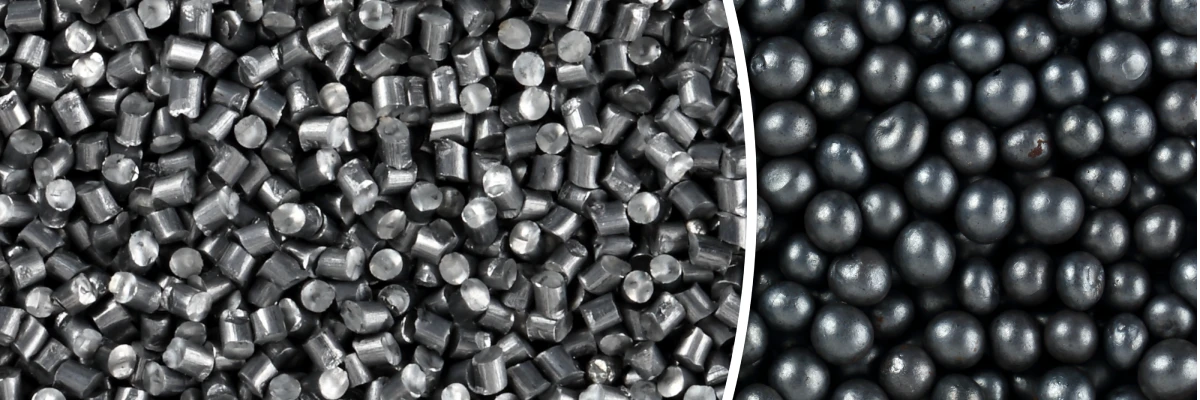
Cut wire shot — unlike cast shot — has precise dimensions and uniform mass, which makes size selection even more impactful on:
- Consistency of peening intensity
- Surface finish repeatability
- Life of the component
- Process control
- Dust generation and media breakdown
Common Mistakes to Avoid When Selecting Shot Size
❌ Choosing the smallest size to “improve finish”
❌ Using large shots for thin or soft materials
❌ Overlooking machine parameters
❌ Not checking specification requirements
Industries like aerospace, OEM auto, and heavy engineering have strict standards.
Choosing Cut Wire Shot Size: A Simple Decision Framework
Use this quick checklist before selecting a size:
1. What is the main objective?
- Peening? → Medium to large shots
- Cleaning? → Medium
- Polishing/surface finishing? → Small
2. What material is being treated?
- Hard materials → Larger sizes
- Soft alloys → Smaller sizes
3. What finish or intensity do you need?
- High intensity → Larger shots
- Smooth finish → Smaller shots
4. Are there industry standards?
Conclusion
- Better fatigue life
- Reduced dust
- Improved cleanliness
- Longer media service life
- Consistent shot peening results
Whether you work in automotive, aerospace, casting, forging, or fabrication, selecting the correct size will elevate the quality and efficiency of your operation.
TOCO Steel Pvt Ltd – Your Partner in Precision Cut Wire Shot Solutions
At TOCO Steel Pvt Ltd, we manufacture and supply high-grade Carbon Steel, Stainless Steel, Aluminium, Copper, and Brass Cut Wire Shots in all standard sizes.
Our experts can help you determine the perfect shot size for your specific process, component, and intensity requirement.