Keywords: Shot Peening Media, Residual Stress, Metal Fatigue, Surface Treatment, Shot Peening Process, Peening Media Selection, Cast Steel Shot, Cut Wire Shot, Ceramic Media, Glass Bead Media
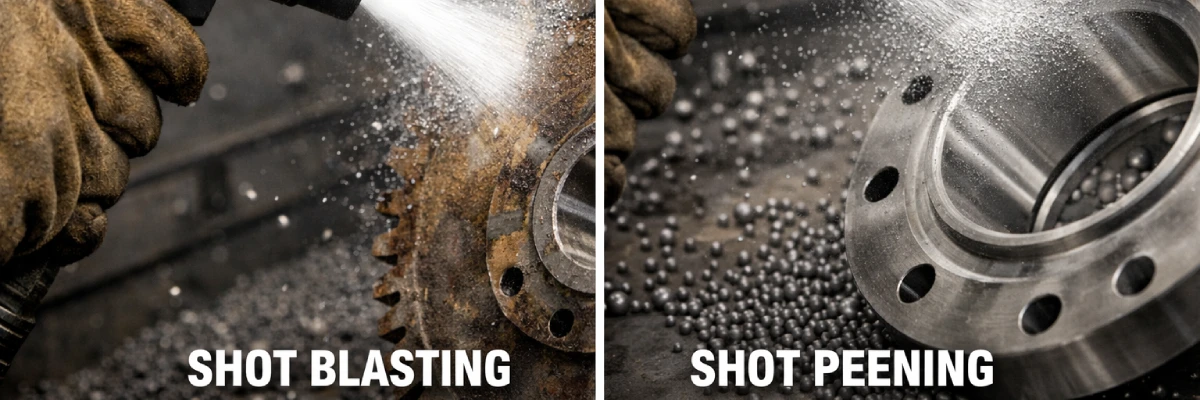
Extending the lifespan of metal components often begins at the surface—and among the many surface enhancement techniques available, shot peening continues to prove itself as one of the most reliable and cost-effective. At TOCO Steel Pvt. Ltd., we rely on shot peening not just as a process, but as a science that blends material behaviour, media selection, and controlled impact energy.
But what exactly happens when millions of tiny spherical particles strike a metal surface? The answer lies in the fascinating relationship between shot peening media and residual stress.
Understanding Residual Stress: The Silent Enemy Within
Every metal component faces internal stresses throughout its lifecycle—created during machining, welding, forming, heat exposure, and even normal operation. While some stresses dissipate once the load is removed, many remain trapped inside the microstructure as residual stresses.
1. Tensile Residual Stress (The Enemy)
Tensile stresses behave like invisible cracks waiting to grow. They accelerate fatigue failure, making components more vulnerable under repeated loading.
2. Compressive Residual Stress (The Protector)
Compressive stresses act as a shield. They restrict crack initiation and slow crack propagation, dramatically increasing service life.
The objective of surface engineering is clear: reduce tensile stress and introduce compressive stress where it matters most.
Shot Peening: Turning Impact into Protection
This deformation creates a beneficial compressive residual stress layer—one that counters existing tensile stresses and delays crack growth. Think of it as a protective armor built into the metal itself.
Why Shot Peening Media Matters: Choosing the Right Impact
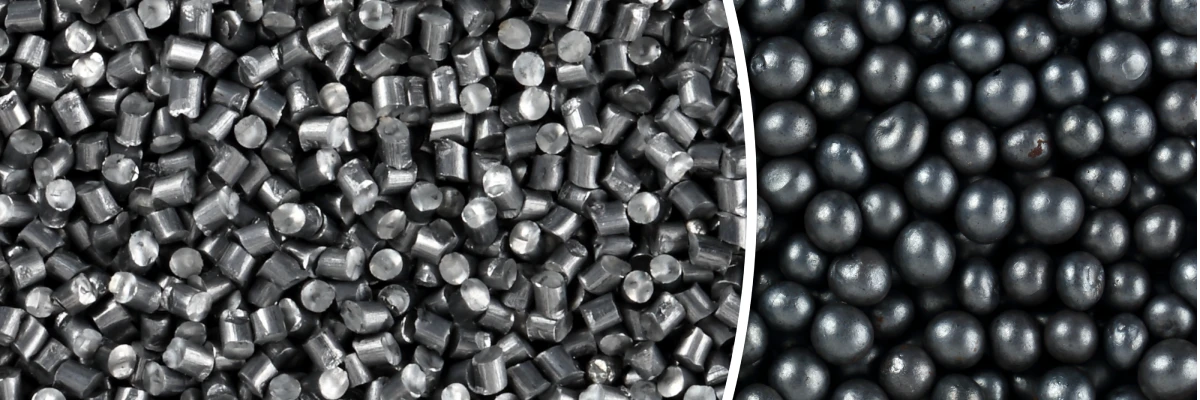
1. Cast Steel Shot:
2. Cut Wire Shot:
- Uniform size and shape
- Consistent peening intensity
- Lower breakage rates
- Longer usable life
Because of these advantages, Cut Wire Shot is preferred in Aerospace, Automotive, and High-Performance applications.
3. Ceramic Media:
- Tight process control is required
- Contamination must be avoided
- Non-ferrous components are involved
- High-intensity peening is needed
4. Glass Bead Media:
Glass beads provide the gentlest impact and are ideal for:
- Delicate surfaces
- Thin sections
- Cosmetic finishing
- Non-destructive cleaning
The Numbers Don’t Lie: Benefits of the Right Media
Studies consistently highlight the advantages of selecting proper shot peening media:
- 25% reduction in surface defects when using cut wire shot instead of cast steel shot (NACE International).
- Up to 40% lower media consumption costs with cut wire shot due to lower breakage (ASTM International).
- 2x to 10x increase in fatigue life across various metals and industries due to properly executed shot peening.
These improvements translate into longer component life, reduced maintenance, and significant savings.
Beyond Media: The Science of Optimizing Shot Peening
The true power of shot peening emerges when all parameters are controlled with precision:
- Media size and hardness
- Impact velocity
- Peening intensity
- Coverage percentage
- Nozzle angle & distance
- Surface cleanliness
At TOCO Steel Pvt. Ltd., our expertise ensures that every variable is dialed in to deliver the maximum benefit for your component’s application and material type.
Conclusion: A Symphony of Metal, Media, and Mastery
As materials evolve and performance demands grow, the importance of shot peening media selection will only become more significant in shaping the durability of modern metal components.